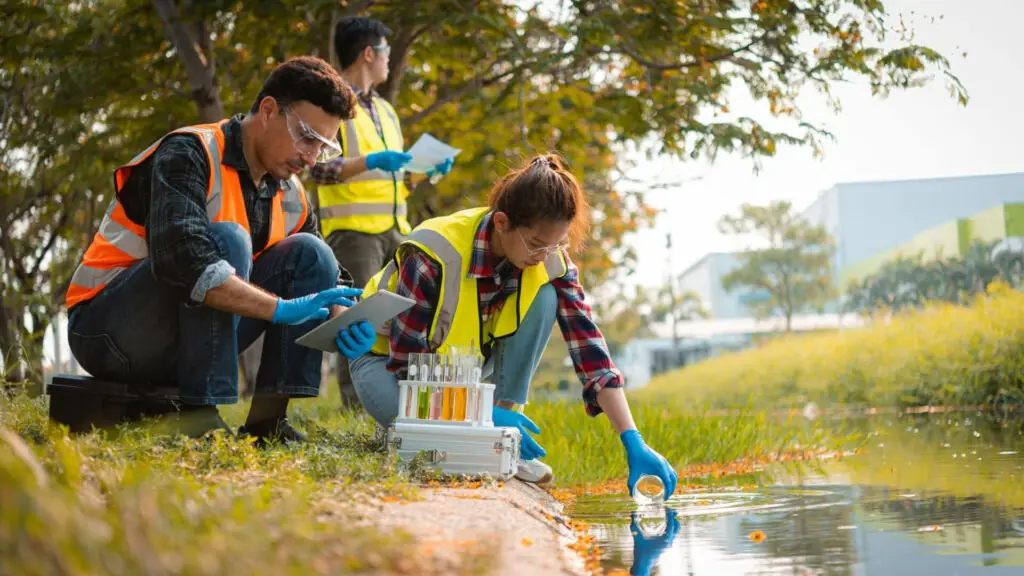
The Invisible Migration through Our Ecosystem
For decades, the popular perception of industrial pollution was simple: it happened near the factories. If you lived in a pristine rural town or a remote suburb, you likely felt safe from the toxic legacy of chemical manufacturing. Unfortunately, “forever chemicals” (PFAS) have radically changed that narrative. Because of their unique chemical properties, these substances do not stay where they are released. They are remarkably mobile in the environment, hitching rides on water currents, air molecules, and even rainfall to reach taps thousands of miles away from any industrial source. Understanding the scale of this migration is critical for every household. To begin your journey of awareness, you can first learn what are pfas and why they are so persistent.
The primary vehicle for PFAS is the hydrologic cycle. Unlike many other pollutants that stick to soil or clump together, PFAS are highly soluble in water. Once they enter a river or a stream, they stay dissolved and travel with the current. This means that a factory discharging waste in one region can cause water contamination in a town many miles away. The chemicals flow into our reservoirs and permeate our aquifers, the underground layers of rock that hold the water for our public and private wells. Research from the EPA has confirmed that these chemicals are now detectable in the drinking water of millions of Americans, regardless of their proximity to industrial sites.
The Impact of Firefighting Foams
Manufacturing plants are the primary sources, but they are far from the only ones. One of the most significant and often overlooked ways PFAS enter our drinking water is through the use of Aqueous Film-Forming Foam (AFFF). This specialized foam has been the standard for fighting jet fuel fires at military bases and airports for over fifty years. Training exercises at these sites involved spraying massive amounts of this foam—which is packed with high concentrations of PFOS and PFOA—directly onto the ground. Over time, the rainfall washed these chemicals deep into the soil and directly into the groundwater aquifers. Identifying where pfas come from in these specific contexts has led to massive nationwide testing programs.
Because many military bases and airports are located in otherwise rural areas, the contamination plumes can spread through the underground water systems for miles. Families on private wells near these facilities are at particularly high risk. According to the CDC (ATSDR), the groundwater plumes from legacy firefighting activities can remain toxic for centuries if not actively filtered. This has made health exposure a localized reality for communities that thought they were geographically safe. Support for advanced research from groups like the NIEHS is crucial as we try to understand the long-term impacts of this global chemical dispersion.
Landfill Leachate: The Hidden Source
Every time you throw away a non-stick pan, waterproof clothing, or grease-resistant packaging, you are potentially contributing to water contamination. Landfills act as massive reservoirs for these eternal chemicals. As rain falls on a landfill, it filters through the waste, picking up various pollutants and creating a toxic liquid called “leachate.” While modern landfills have liners to catch this liquid, many older landfills or those with compromised liners allow this leachate to seep into the surrounding earth. Once the chemicals escape the landfill, they enter the groundwater and begin their slow crawl toward your tap. This is why pfas in products disposal is an important environmental topic.
This environmental migration explains why PFAS are being found in drinking water even in areas with no history of chemical manufacturing. The legacy of our own consumer habits is coming back to us through the environment. For homeowners, this emphasizes the importance of reducing pfas at home by being mindful of the products they buy and how they dispose of them. It also highlights the need for municipal landfills to adopt more advanced filtration systems that can capture PFAS before any leachate is released. By staying informed through reliable sources like NIH research portals, you can keep up with the latest findings on how to protect your primary water source from these invisible migrants.
Securing Your Tap Water
The journey of forever chemicals from the factory to your tap is a sobering reminder of the interconnectedness of our environment. While we cannot easily stop the rain from falling, we can protect the point where water enters our homes. Investing in high-quality filtration—such as Reverse Osmosis systems certified for PFAS removal—is currently the most effective way for a household to opt out of this environmental legacy. By taking individual action while supporting broader regulatory bans on PFAS production, we can slowly begin to close the tap on this global contamination crisis and move toward a future where our drinking water is truly pure once again.
Brooklyn residents wondering whether these environmental pathways affect their own taps can consider PFAS drinking water testing in Brooklyn. The results should be interpreted alongside information about the local water supply, rather than treated as proof of a particular contamination source.